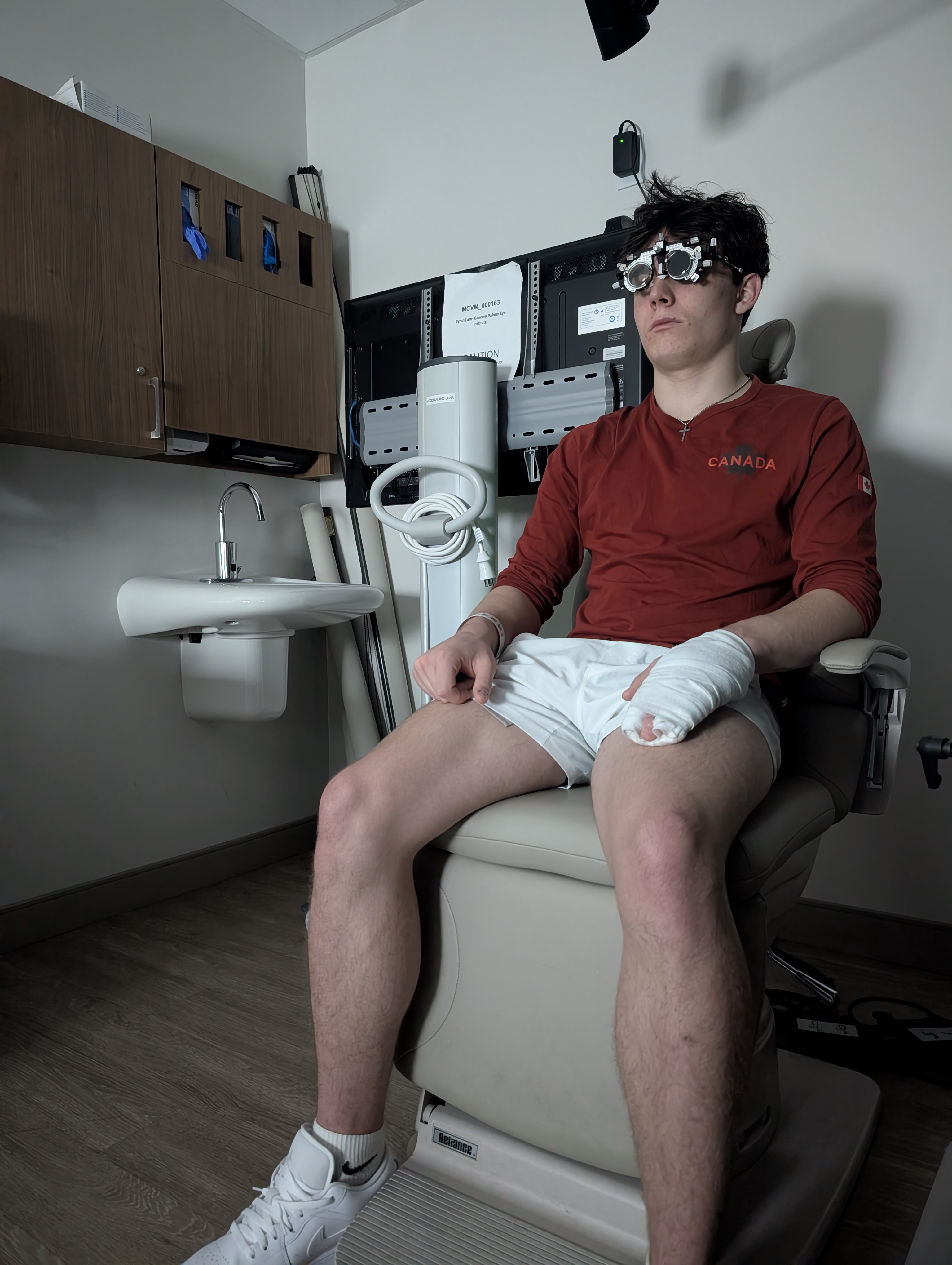
Parasport athlete. AI researcher. Inventor. At 14, I became the youngest player ever on Canada's national goalball team. I build technology to diagnose eye diseases, research treatments for them, and advocate for blind youth.
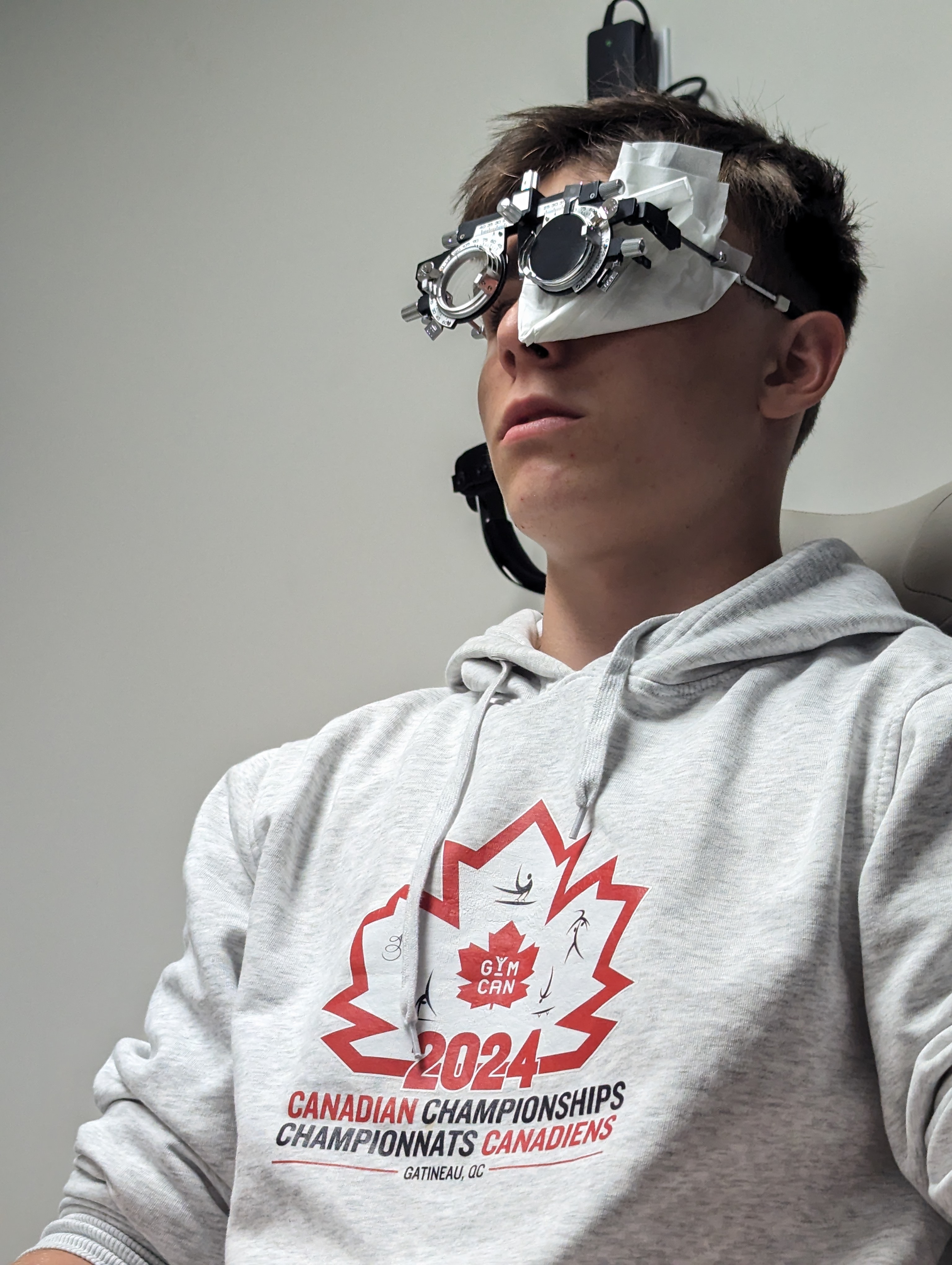
I was diagnosed with retinitis pigmentosa when I was nine. At first, it was really hard. But then I found goalball, and everything changed.
I signed my athlete agreement with Canada's senior men's national goalball team at 14, making me the youngest player ever on the team. I was selected as flag bearer for Canada at the 2025 Youth Parapan American Games in Chile, where I scored the winning goal against Mexico. In 2026 I was named MVP of the Senior National Championships and played my first World Championships in Hangzhou, China.
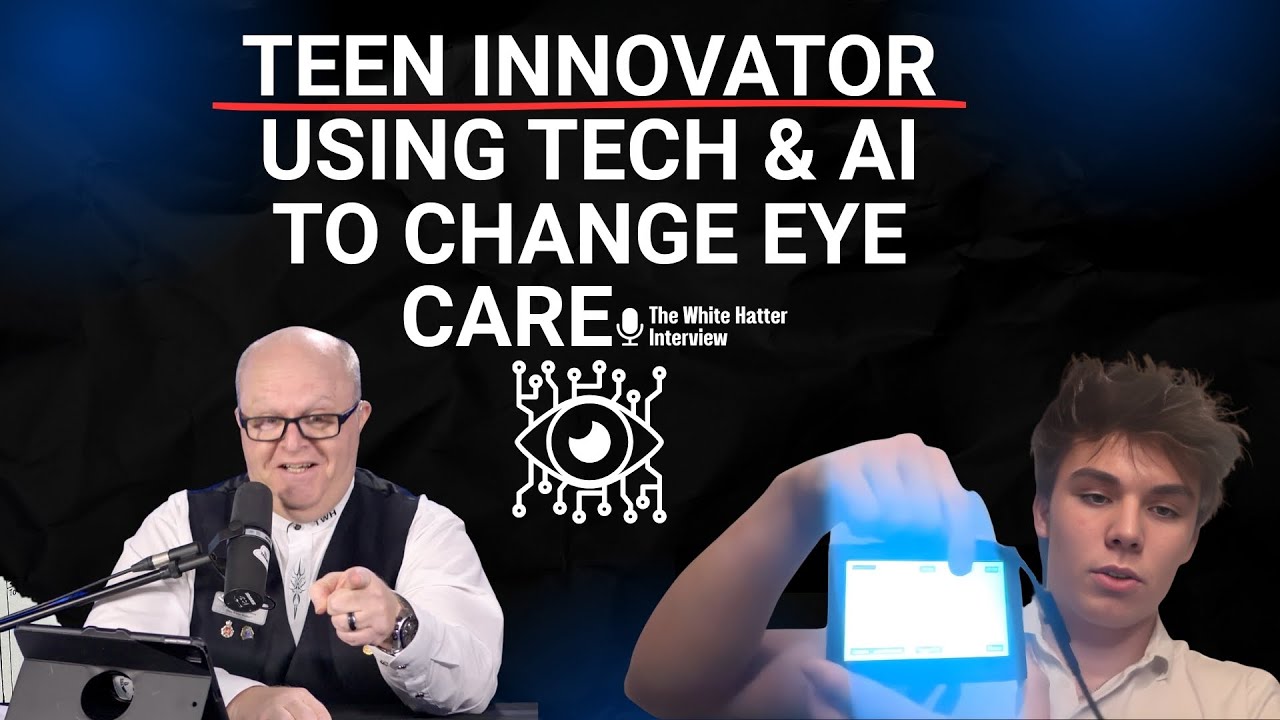
I'm also a 4-time CWSF medalist and an Ingenious+ national finalist. I build AI tools and affordable hardware to help diagnose eye diseases earlier. My app As I See It uses AI to simulate visual impairments through your camera. My retinal camera project makes eye screening accessible to everyone.
My newest research goes a step further: using molecular dynamics simulations to search for drug compounds that could treat retinitis pigmentosa, not just detect it. I screened 17,375 compounds looking for one that stabilizes the misfolded P23H rhodopsin protein behind many RP cases. It won silver at the 2026 Canada-Wide Science Fair in Edmonton.
I speak at schools, advocate for blind youth programs, and work to make parasports more visible. My diagnosis isn't a limitation. It's what drives me.
Harry Nickerson is a Canadian goalball player and youth researcher from Halifax, Nova Scotia. He signed his athlete agreement with Canada's senior men's national goalball team at age 14, making him the youngest player ever named to the team. He was diagnosed with retinitis pigmentosa at nine years old and builds artificial intelligence tools for detecting retinal disease, alongside computational drug discovery research aimed at treating it. His 2026 Canada-Wide Science Fair project, "In Silico Discovery of Pharmacological Chaperones of P23H Rhodopsin to Treat Retinitis Pigmentosa," won a silver medal.
"In Silico Discovery of Pharmacological Chaperones of P23H Rhodopsin to Treat Retinitis Pigmentosa" - screened 17,375 compounds with molecular dynamics to find a candidate RP therapy
Nova Scotia's provincial honour for grade 11 students, recognizing academic achievement together with leadership and service to school and community
Selected for Shad Canada's national summer STEAM and entrepreneurship program, hosted at the University of New Brunswick
Competed in Senior Division at Canada-Wide Science Fair with continued eye disease research
Recognized by Rideau Hall Foundation for affordable retinal camera innovation. $1,000 award.
Selected as one of eight national finalists for "Screening for RP with Smartphones" - AI that classifies RP with 92% accuracy.
First year participating in the Rideau Hall Foundation's youth innovation challenge.
"Screening for Retinitis Pigmentosa in the Blink of an AI" - AI-powered eye disease diagnosis
Visual field testing algorithm optimization - improving eye examination accuracy
Keynote speaker at the CNIB Guide Dogs Halifax Gala, sharing my journey and advocating for vision health
Sharing my story at schools across Nova Scotia to inspire youth and raise awareness about visual impairment
Working with organizations to expand programming for blind and visually impaired youth in Canada
Founded and lead the Parasport Club at Citadel High School, introducing students to adaptive sports
Featured ambassador helping raise awareness about retinal diseases and the importance of early diagnosis
Advocating for greater media coverage and support for parasports in Canada
2025 Youth Parapan American Games, Chile
Before goalball, I was a competitive gymnast. I trained for years and qualified for the Canadian National Championships - competing against fully sighted athletes while legally blind.
Gymnastics as a blind athlete requires constant adaptation. I memorized the exact number of steps to each apparatus. For floor routines, I counted ceiling tiles and used the sound of the crowd to orient myself. On beam, I relied entirely on muscle memory and spatial awareness - one miscalculation could mean a fall. Vault required trusting my run-up completely, hitting the springboard at full speed without being able to see it clearly.
My coaches developed verbal cues and tactile markers to help me train safely. We would walk through routines together, with them guiding my body positioning until I could feel when a move was correct. Competition was intense - I had to trust my preparation completely because I couldn't watch other competitors or visually gauge the equipment.
That gymnastics training gave me the body awareness and athletic foundation that helps me excel in goalball today. The discipline of trusting your body when you can't rely on your eyes translates directly to a sport played entirely by sound.
Named tournament MVP at the Senior National Goalball Championships in Richmond, BC, where Nova Scotia's men's team finished first
Represented Canada at the IBSA Goalball World Championships in Hangzhou, China - the first qualifying event on the road to LA 2028
Sport Nova Scotia Support4Sport Junior Male Athlete of the Year in Blind Sports (Goalball)
Won gold with Nova Scotia at the 24th Montreal Open, beating Alberta 10-4 in the final
Carried the Canadian flag at the Youth Parapan American Games Opening Ceremony in Chile
Won bronze with Team Canada goalball. Scored the winning goal against Mexico.
At 14, became the youngest player ever to make Canada's senior men's national goalball team
Most Valuable Player at the Junior Goalball National Championship with Nova Scotia
Tournament top scorer with 39 goals at just 15 years old
Building technology to make vision screening accessible to everyone
I turn my own experience with retinitis pigmentosa into a mission: making eye disease diagnosis accessible to everyone.
My app As I See It uses AI to simulate visual impairments through your camera, helping sighted people understand what it's like to live with conditions like RP.
I also build affordable retinal cameras that capture detailed images without pupil dilation, recognized by Ingenious+ as an innovation that expands eye screening to underserved communities.
My newest work moves from detecting RP to treating it. About 1 in 4,000 people have retinitis pigmentosa, and one common cause is the P23H mutation in rhodopsin, which makes the protein misfold so the cell destroys it, killing photoreceptors and stealing vision. There are no approved treatments.
I built a computational drug discovery pipeline using AutoDock Vina and GROMACS to find molecules that stabilize P23H rhodopsin. It screens for strong binding at the retinal pocket, then tests whether the molecule holds the protein together in a realistic membrane using molecular dynamics simulations. After screening 17,375 compounds, one candidate, hnRP94450, restored near-normal stability, making treated proteins behave like healthy rhodopsin across 500 nanoseconds of simulation.
Working with Fighting Blindness Canada and international research institutes, I'm proving that a teenager from Halifax can make a real impact on global health.
Want to collaborate, book a speaking engagement, or just say hi? I'd love to hear from you.